

Gold coins have been used as currency since some of the earliest civilizations known to man. Our earliest ancestors recognized the unique qualities in gold long before it became a symbol of wealth and power. Gold is the only metal that is naturally yellow in color. It has a high density and is able to withstand high temperatures. Gold does not rust or tarnish and retains its weight permanently. It’s also highly malleable, making it easy to shape and stamp without advanced industrial tools.
Gold has the most extensive history of any currency involved in trade and commerce. Lydian merchants were the first to utilize gold as currency in 700 BC. King Croesus of Lydia introduced the Croeseid, the first gold coin ever struck. The use of coinage spread from Lydia and became the norm throughout the region. The Persian Empire eventually conquered Lydia, but the use of gold has continued into the present day.
Ancient and Medieval Pillars of Trade
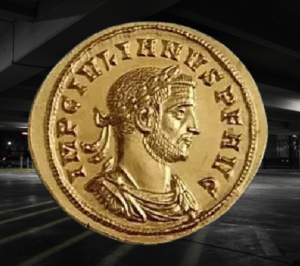
The Roman Aureus
The Roman Aureus was the principal gold coin of the ancient Roman Empire. Julius Caesar first standardized it on a large scale in the first century BC. The aureus contained 8 grams of nearly pure gold and had a value of 25 silver denarii . It was used for high-value transactions, including military wages and payments among the elite. Gold coins continued to integrate into European culture, and after the fall of Rome, the Byzantine Empire continued the tradition up until the Middle Ages.
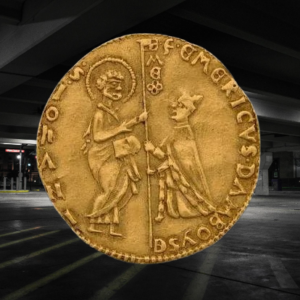
The Venetian Ducat (Zecchino)
The Venetian Ducat was created as a rival after the debasement of the Byzantine Hyperpyron, which the Venetians used to pay for trade. The Venetian ducat, also known as the zecchino, originated in Venice in 1284 and became a standard in international trade during the Middle Ages and the Renaissance. Because of its reliable weight and purity, it was widely used by many countries creating their own version of the ducat.
The Evolution of European Gold Standards
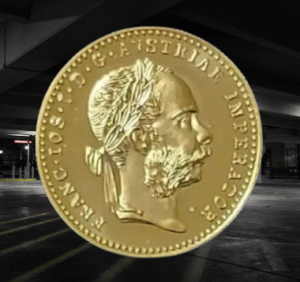
The Austrian Ducat
Austria among other European countries modeled their national coin after the Venetian ducat, keeping the same standards. The universal standard of a ducat is 3.494 grams of gold, 98.6% purity , with a thickness of around 0.7 mm . Austria’s National coin, the gold ducat became one of the most widespread coins throughout Europe. The obverse side of the coin has a portrait of Emperor Franz Joseph . The reverse features the Austrian coat of arms with the majestic double-headed Imperial Eagle. The Austrian ducat is one of the world’s oldest and most popular gold coins still minted today as “restrikes” featuring the 1915 date.
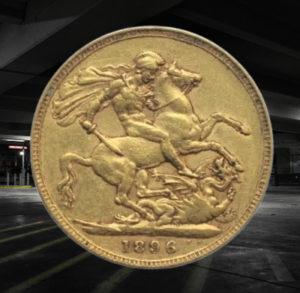
The British Gold Sovereign
The Royal Mint traces its origins back to 886 AD in London. King Alfred the Great’s British gold coins transformed from medieval status symbols into the foundation of the global financial system. The gold noble was created in 1344, followed by the first gold sovereign in 1489 . The British sovereign has a nominal value of 1 pound sterling and contains 0.2354 oz of pure gold. The gold sovereign features the iconic image of St. George on horseback slaying a dragon designed by famed artist Benedetto Pistrucci . It’s widely regarded as one of the most beautiful coins ever struck.
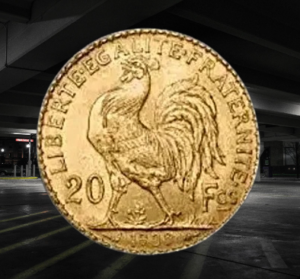
The French 20-Franc (Napoleon)
The French 20-franc gold coin was first minted in 1803 under Napoleon Bonaparte and was produced for over a century. Often called “Napoleons,” 20-franc gold coins featuring the ruler were struck in three versions: the Louis, the Laurette head, and the bald head. In 1871, after the Second Empire collapsed, France introduced the Lucky Gold Angel (1871–1873), followed by the Gallic rooster (1899–1914). This marked the end of the Napoleon III gold series, which had continuously minted coins from 1852 until the empire’s fall.
The Rise of North American and Modern Bullion
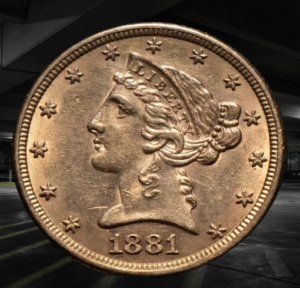
United States Gold Eagles
Before the US Mint began producing coins, Americans used foreign gold coins for trade, including the Spanish Doubloon, the English Guinea, and gold Ducats. The first gold coin struck by the US Mint was the Gold Eagle in 1795 . Gold Eagles did not have a denomination until 1838, with the release of the $5 Half-Eagle , followed by the $10 Eagle and $2.50 Quarter-Eagle . In 1907, the US Mint produced the Saint-Gaudens gold double eagle coin . Weighing nearly a full ounce of gold, it is widely regarded as one of the most beautiful coins ever struck.
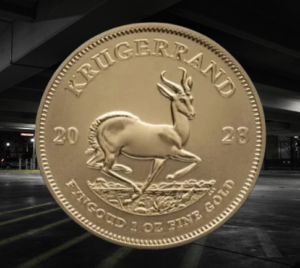
The South African Krugerrand
The iconic South African gold Krugerrand was the first and only modern gold bullion coin until the release of the first Gold Maple Leaf in 1979. The incredible success of the Krugerrand was due to inflation, the end of the gold standard, and a massive gold bull market. It’s estimated that 75% of the gold coins in circulation during the 1980s were Krugerrands. The obverse bears the portrait of South African president Paul Kruger . The reverse features a springbok antelope , native to South Africa. The Krugerrand has a beautiful rustic look due to its precious metal content. The gold Krugerrand has a purity of 22 karats (91.67% pure gold) , with the remaining 8.33% consisting of copper .
The American Gold Eagle
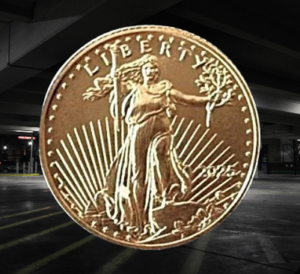
As a result of the Krugerrand’s success, the United States Mint released the American Gold Eagle in 1986 . Since its debut, the Gold Eagle has been issued annually and is highly favored among collectors and investors. The image of Lady Liberty on the obverse is a depiction of the iconic Double Eagle design by Augustus Saint-Gaudens . It features Lady Liberty striding forward with a torch in one hand and an olive branch in the other. The reverse side of the coin features an up-close portrait of the majestic American bald eagle. The Gold Eagle remained unchanged for 35 years; in 2021 , the coin was redesigned with a new image of the bald eagle on the reverse.
Conclusion:
A Dual Legacy of Wealth and Art
Once used for trade and everyday transactions, today gold coins serve a dual role: as a store of wealth and as a timeless treasure . Investors favor gold coins for their value as a tangible asset without counterparty risk. Collectors purchase modern gold coins for their numismatic value, which derives from scarcity, appeal, historical significance, and conditio n.